

Environmental, Social, and Governance (ESG)
Expert guidance and hands-on support to achieve ISO certification success.
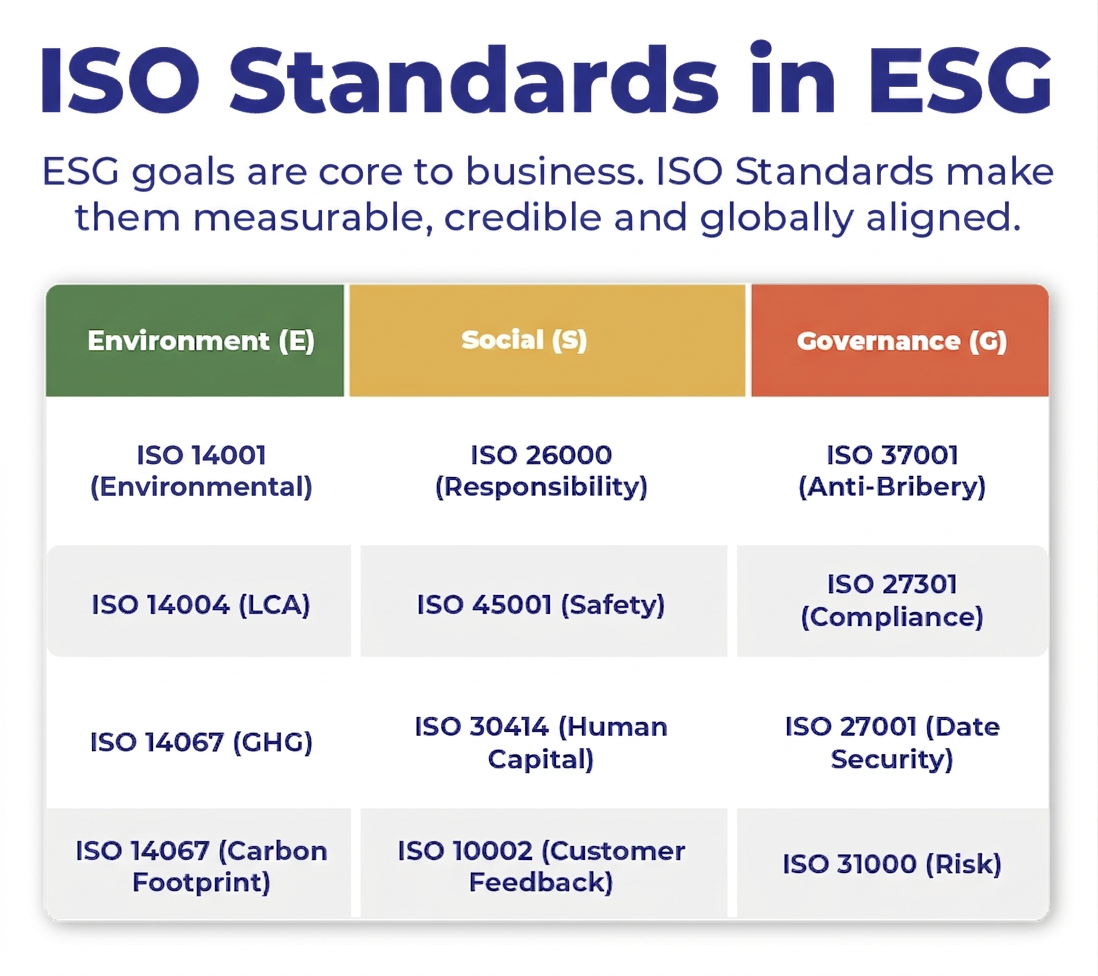
Key trends shaping the future of ESG reporting include:
ESG Trends
Understanding the evolving landscape of Environmental, Social, and Governance initiatives
Predicting Trends
An ever-evolving global ESG regulatory landscape: Regulatory developments, such as the adoption of international sustainability standards and enhanced climate-related disclosures, will shape the future of ESG reporting, driving greater transparency, consistency, and comparability in ESG disclosures.
The Growing Influence of ESG Reporting on Corporate Policy
ESG considerations are increasingly integrated into corporate decision-making processes, influencing strategic priorities, risk management practices, and stakeholder engagement strategies. As investors and consumers demand greater transparency and accountability, companies are embracing ESG reporting as a means of demonstrating their commitment to sustainability and responsible business practices, driving positive change, and shaping corporate policies worldwide.
ESG Reporting in the Age of Digital Transparency and Accountability
Advancements in technology, including ESG reporting software, data analytics tools, digital platforms and AI, are revolutionising the way companies collect, analyse, and disclose ESG data. By leveraging digital technologies, companies can enhance transparency, accountability, and efficiency in ESG reporting practices, providing stakeholders with real-time access to reliable and actionable ESG information.
The Three Pillars of ESG
Environmental Stewardship
Measuring the impact of ESG initiatives
Environmental aspects of ESG reporting focus on a company's efforts to mitigate environmental impact, conserve natural resources, minimise pollution, and promote sustainable raw material sourcing practices. This includes initiatives to reduce carbon emissions, adopt renewable energy sources, implement sustainable waste management practices, and engage suppliers to promote environmental stewardship in the supply chain. By measuring and reporting on environmental performance metrics, companies can assess their ecological footprint, identify areas for improvement, and implement strategies to enhance environmental sustainability.
Social Responsibility
Metrics and reporting on people and society.
Social aspects of ESG reporting encompass a wide range of issues related to an organisation's own workforce, customers, suppliers, and the broader community. This includes diversity, equity, and inclusion initiatives, employee health and safety, labour practices, human rights throughout the company's operations and supply chain, and community investment programmes. By measuring and reporting on social performance metrics, companies can assess their impact on employees, communities, and society at large, demonstrating a commitment to fair and ethical business practices.
Governance
Transparency in corporate practices and ethics.
Governance-related disclosures focus on corporate governance structures, board composition, executive compensation, and measures to prevent bribery, corruption, and unethical behaviour. This includes policies and procedures related to corporate governance, compliance with regulatory requirements, and internal controls to safeguard shareholder interests. By promoting transparency and accountability in corporate governance practices, companies can enhance investor confidence, reduce risk, and foster long-term sustainability.
Benefits of ESG Reporting
ESG reporting offers numerous benefits for organizations committed to sustainability and responsible business practices:
Complying with Regulatory Disclosure Requirements
ESG reporting helps companies comply with evolving regulatory requirements and reporting standards. By providing timely and accurate ESG disclosures, companies can avoid regulatory penalties, litigation risks, and reputational damage associated with non-compliance.
Enhancing Decision-Making
ESG reporting provides valuable insights into how your company is performing in key areas like environmental impact, social responsibility, and governance practices. Armed with this data, you can make informed decisions that not only benefit your bottom line but also contribute to a more sustainable future.
Attracting Investors
In today's dynamic investment landscape, forward-thinking investors are drawn to companies that demonstrate a commitment to sustainability and responsible business practices. By showcasing your ESG performance through reporting, you position your company as a forward-looking organisation, poised to adapt, evolve, and innovate in a rapidly changing world. This lays the foundation for long-term success and resilience in the future.
Strengthening Brand Reputation
ESG reporting can help businesses protect and enhance their brand. By publicly disclosing your ESG performance, you demonstrate transparency and accountability, earning the trust and loyalty of your customers, employees, and communities.
Mitigating Risk
ESG reporting helps companies identify and address potential risks that could harm their reputation or financial performance.
Driving Innovation
ESG reporting can be a powerful catalyst for innovation. When you start measuring and reporting on your environmental and social performance, you uncover areas where your company can improve and innovate.
How can WWISE help?
Entering the world of ESG disclosures can feel like embarking on a journey through a complex maze, especially with the ever-evolving landscape of sustainability reporting standards. The following best practices can be implemented to guide you toward credible ESG reporting:
- Conducting a comprehensive assessment of your organisation's current ESG practices, identifying key areas of strength and opportunities for improvement.
- Engage with investors, customers, employees, and regulators, to understand their expectations and priorities regarding ESG performance and reporting and soliciting feedback from stakeholders and incorporating their input into ESG disclosures to ensure relevance, transparency, and accountability.
- Develop a clear ESG strategy and roadmap, setting measurable goals, targets, and timelines for improvement.
- Building an ESG data foundation: Integrating internal and supply chain data, leveraging technology and data analytics tools, and establishing effective data governance processes to ensure data accuracy, completeness, and reliability.
- Achieving accuracy and consistency in ESG disclosures: Standardising reporting methodologies, aligning ESG metrics with industry standards and guidelines, and conducting regular audits and validations to verify the accuracy and reliability of ESG data.
