
2026 Web Development Trends
A website reveals its weaknesses rapidly. A slow page, a clumsy form, a confusing menu, or a poor mobile experience can undo months of marketing effort in seconds. That is why web development decisions matter far beyond design. They shape visibility, trust, and revenue.
For South African businesses, this matters even more because digital behaviour continues to be strongly shaped by mobile access. DataReportal reported 50.8 million internet users in South Africa at the start of 2025, equal to 78.9 percent of the population, while ICASA’s 2025 sector report said national mobile connectivity stood at 72.6 percent, reflecting a strong preference for mobile devices as the way many South Africans get online.
That context changes what good web development looks like in 2026. The priority is no longer simply building a modern site; the priority is building a site that performs well in real South African conditions, supports search visibility, feels trustworthy, and makes it easy for people to take action.

Why web development trends matter for South African businesses
Many businesses still treat web development as a visual refresh project. They focus on colours, layout, and homepage messaging while overlooking the systems and experience decisions that affect performance. In practice, the real value of a website depends on how well it works.
A strong business website should help users complete important actions with as little friction as possible. That may mean submitting an enquiry, booking a consultation, registering for a course, reading a service page, or completing a purchase. If the site is slow, difficult to navigate, or unclear on mobile, the problem is not only technical, it is commercial.
This is where web development trends in South Africa become a practical topic rather than a design topic. South African businesses operate in a market where mobile access is widespread, online competition is increasing, and user patience is limited. The businesses that win online in 2026 will be the ones that build around real user behaviour, not internal assumptions.
Trend 1: Mobile first design is still the foundation
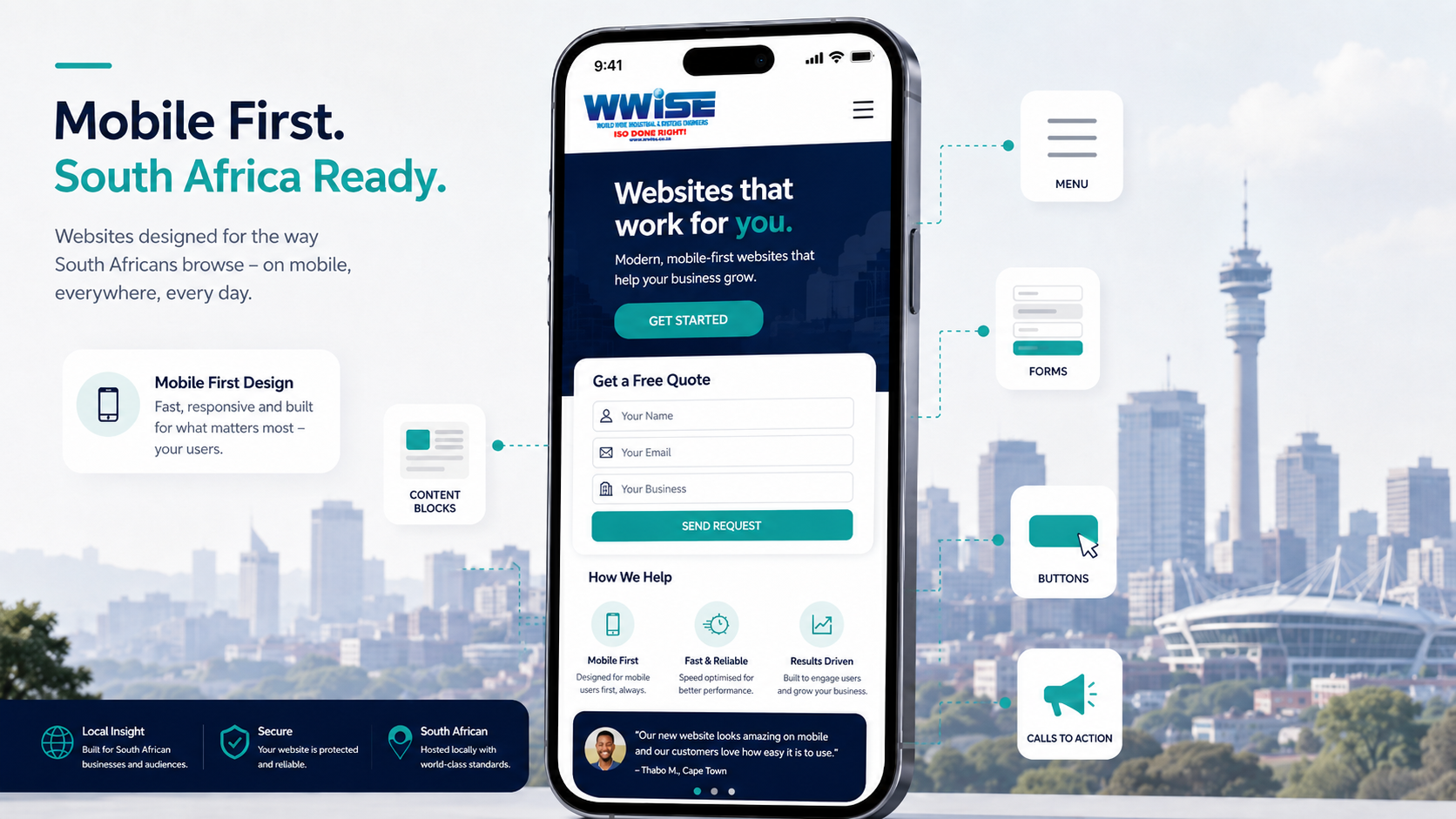
The phrase may sound familiar, but mobile first design is still the most important web development priority for many South African businesses. It is not an old trend that can be ignored. It remains the baseline for relevance.
The reason is simple. South Africans rely heavily on mobile connectivity, and online buying behaviour is following the same pattern. ICASA’s 2025 report highlights the national preference for mobile access, while January 2026 reporting on South African e-commerce said mobile first shopping continues to dominate, with around 77 percent of online consumers shopping via mobile devices.
That has major implications for web development. A site that looks good on a desktop monitor but feels cramped, slow, or awkward on a phone is not ready for current demand. Mobile first design means more than responsive layout. It should influence:
- navigation structure
- button size and spacing
- form design
- content hierarchy
- image handling
- page speed
- checkout and lead capture flow
A useful question for any South African business is this: if a potential customer lands on your website from a phone while commuting, standing in a queue, or using limited time on mobile data, can they understand your offer and act on it quickly?
If the answer is no, mobile first design should be treated as an urgent business priority.
Why this matters
Strong mobile execution improves more than the way a website looks. It affects how easily people find, use, and trust a business online.
Better reach
A mobile ready website supports the way many South Africans already browse, compare services, and shop online. If the mobile experience is weak, the business may lose visitors before they even understand the offer.
Higher conversion potential
When forms, calls to action, menus, and service pages work properly on mobile, visitors can move from interest to enquiry with less effort. A smooth mobile journey makes it easier for users to take the next step.
Stronger trust
A website that works well on mobile gives the impression that the business is credible, current, and easy to deal with. A poor mobile experience can create doubt, even when the service itself is strong.
Improved SEO support
Mobile usability supports overall page experience. Google’s guidance on page experience includes mobile usability as one of the factors that can influence how users experience a page.
Trend 2: Website performance is now a growth issue, not only a technical issue
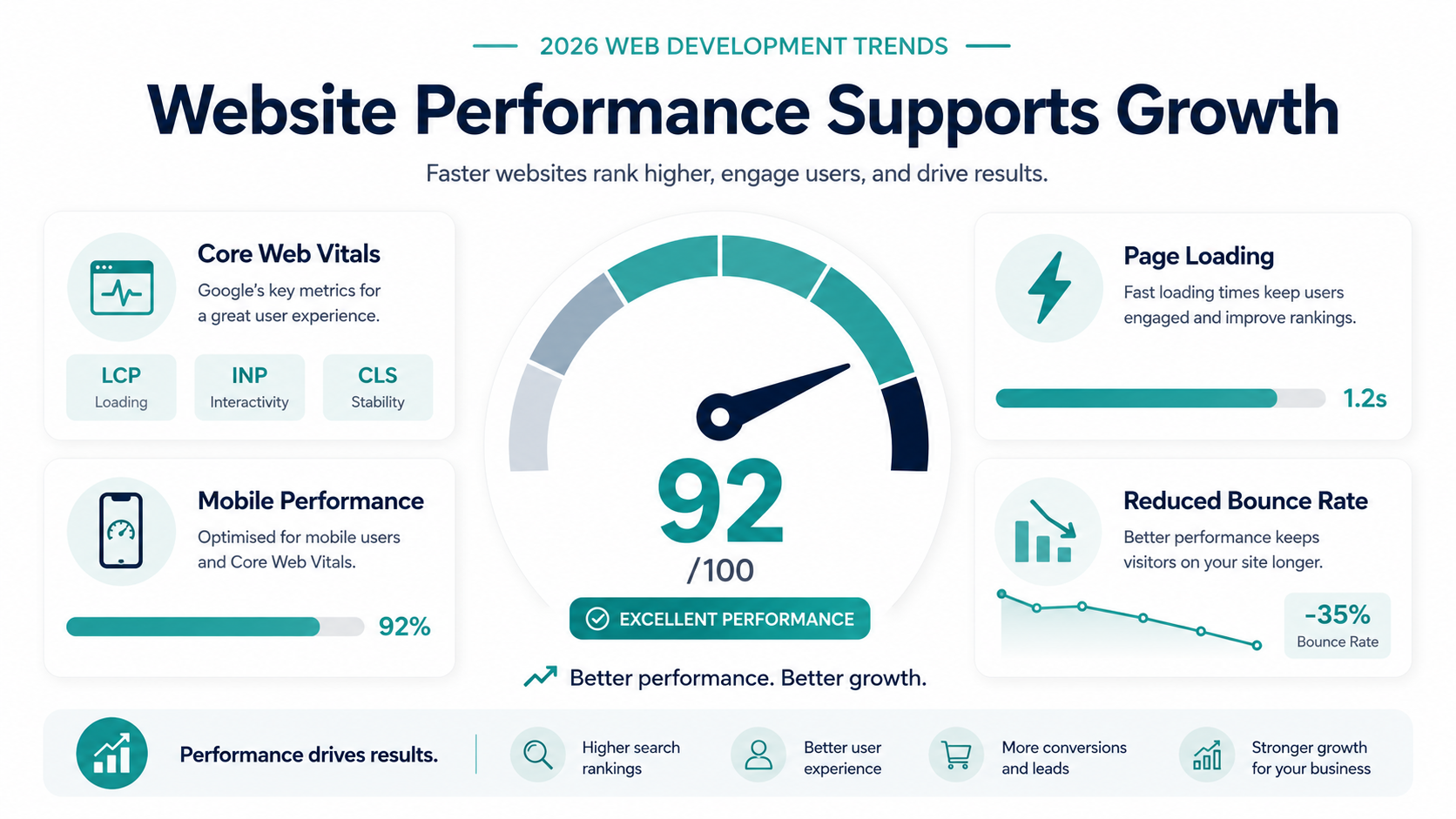
There was a time when page speed was mostly discussed by developers and SEO specialists. In 2026, that is no longer enough. Website performance affects visibility, user experience, and commercial outcomes at the same time.
Google states that Core Web Vitals measure real-world user experience in loading performance, interactivity, and visual stability, and recommends that site owners achieve good Core Web Vitals for success in Search and for a strong user experience more broadly. Google also advises site owners to assess whether pages display well on mobile devices and are served securely.
For South African businesses, performance deserves extra attention because not every user experiences the web under ideal conditions. A site loaded with oversized images, unnecessary scripts, bloated page builders, or poor hosting decisions may still appear acceptable in an office with strong broadband. That same site can feel frustratingly slow in everyday use.
This is why modern web development should prioritise:
- lean page structure
- compressed media
- sensible use of scripts and plugins
- quality hosting
- performance testing on mobile
- reduced visual clutter above the fold
A fast site does more than help rankings; it reduces abandonment, improves engagement, and supports every marketing channel that sends people to the website.
Example: Performance versus presentation
Imagine two service businesses targeting the same South African market.
The first business launches a visually impressive site with large autoplay banners, heavy animations, and long pages packed with effects. The second launches a cleaner site with focused service pages, fast loading content blocks, strong calls to action, and lightweight media.
The first site may look more dramatic in a boardroom presentation. The second is more likely to generate usable outcomes; visitors can access information faster, understand the offer sooner, and complete key actions with less friction.
That is the important shift in 2026. Website performance is no longer a back-end concern. It is part of the growth model.
Trend 3: Secure web development is becoming a trust signal
Security is often treated as a separate conversation from web development. In reality, users experience security through the website itself. They notice whether a site feels trustworthy, whether forms seem safe to complete, and whether the brand appears serious about handling information responsibly.
Google’s page experience guidance includes secure delivery as part of what site owners should assess. For South African businesses, this matters because websites often serve as the entry point for collecting contact details, applications, customer data, support requests, and payment related information.
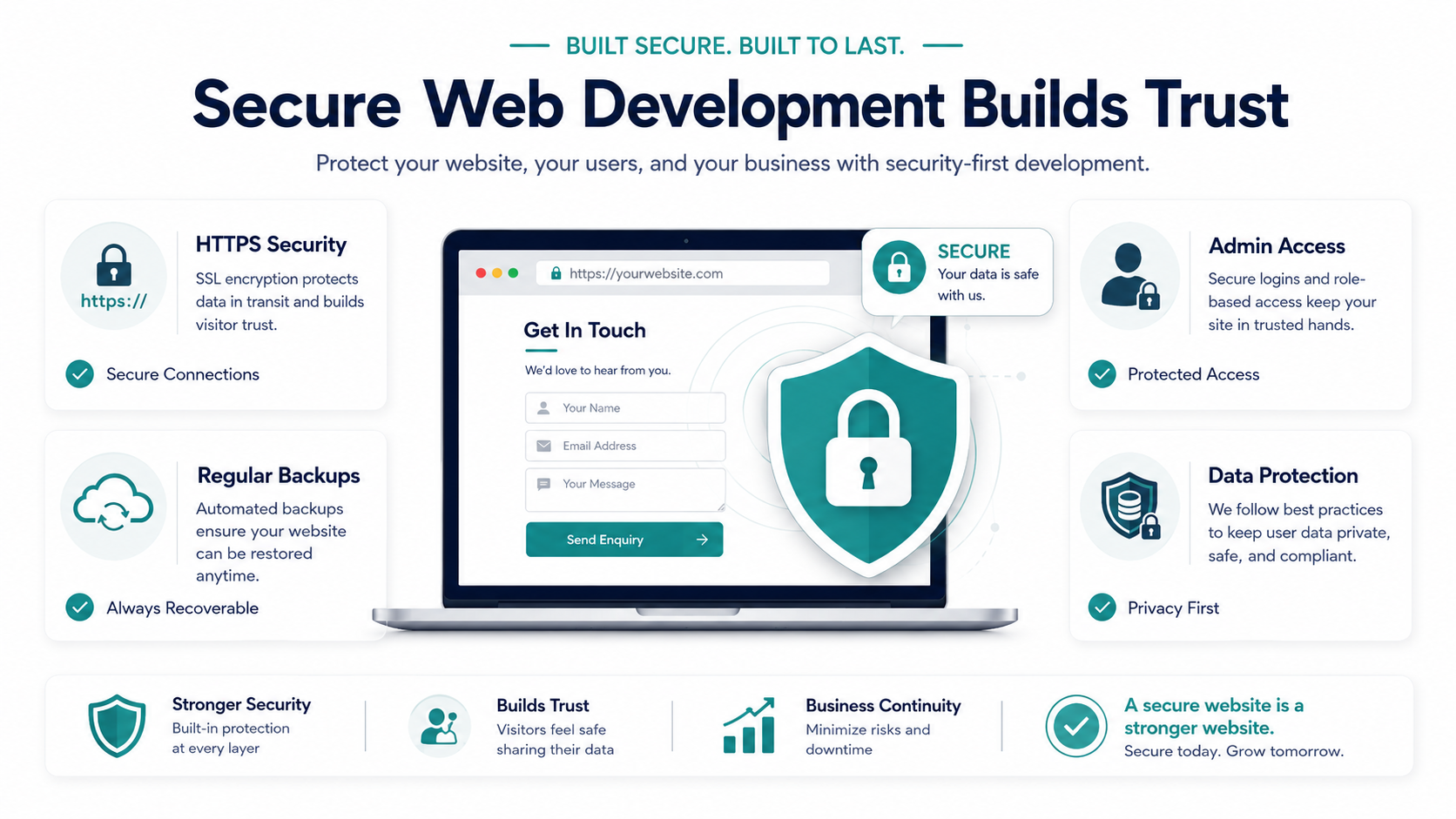
Secure web development should include practical controls such as:
- secure hosting and HTTPS
- properly maintained CMS and plugins
- restricted admin access
- role-based permissions
- spam and bot protection on forms
- backup and recovery procedures
- careful handling of personal information
This is especially important for businesses operating in education, professional services, e-commerce, healthcare, and consulting, where sensitive information can move through the website more often than many teams realise.
Security also supports trust. A site that behaves predictably, avoids suspicious pop-ups, and uses clear form design feels safer to engage with. That can influence whether a visitor becomes a lead.
A word from the user experience perspective
Users do not separate design, performance, and trust into neat categories. They experience them all at once.
If a website is slow, confusing, or intrusive, the visitor does not think, “this site needs technical optimisation,” they think, “this business may not be worth my time.”
That is why strong web development is not about chasing trends for appearance alone. It is about removing friction. Good websites help people move naturally from curiosity to confidence.
Trend 4: SEO and web development are now inseparable
Many organisations still build a site first and think about SEO later. In 2026, that sequencing creates avoidable problems.
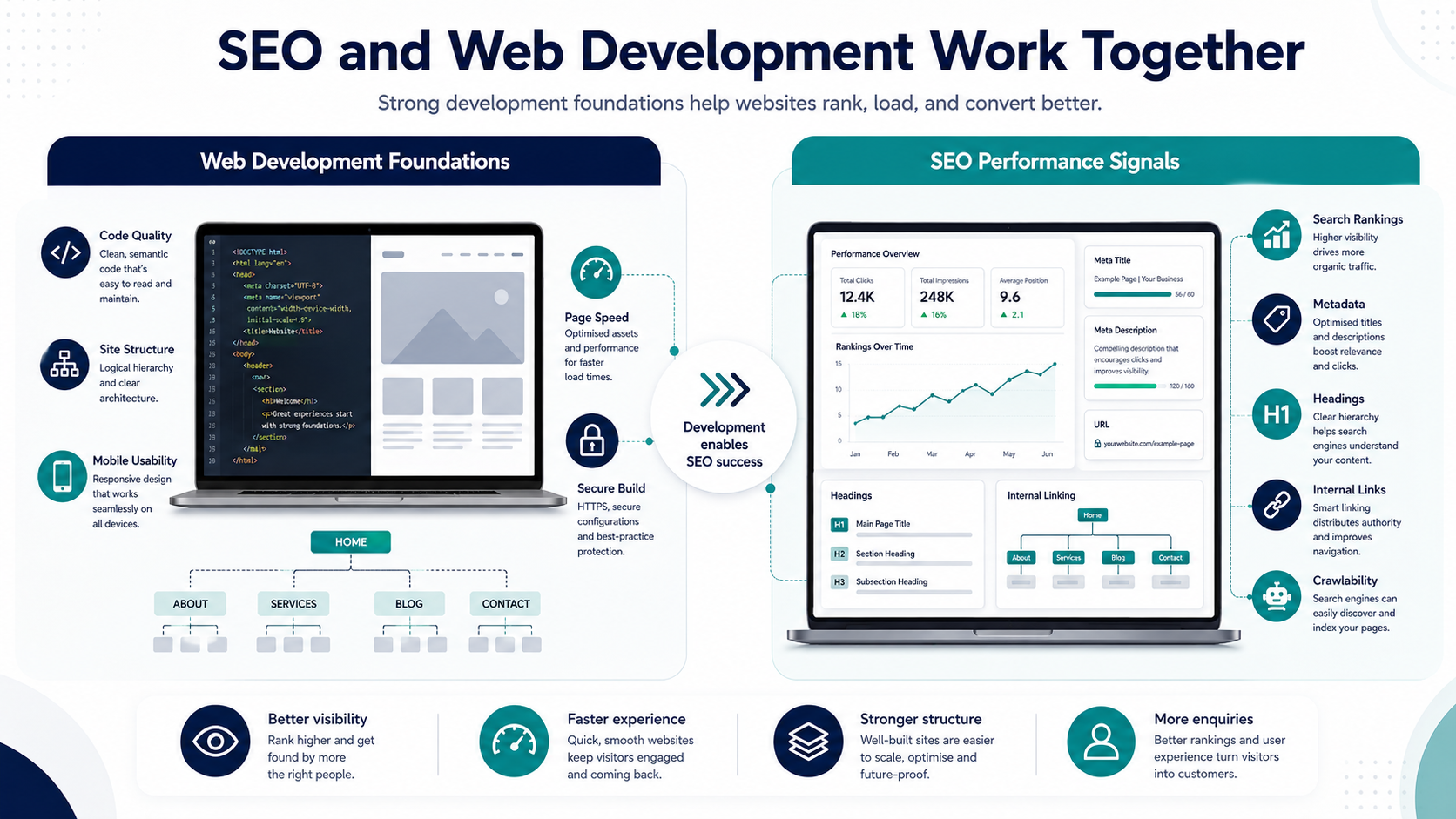
Google Search Central continues to position technical accessibility, discoverability, and helpful site structure as core parts of making content visible in Search. That means SEO is not only about keywords and blog content. It also depends on how the website is built.
A web development team that understands SEO will think about:
- clean site architecture
- crawlable content
- heading structure
- internal linking
- canonical management
- metadata implementation
- page speed
- mobile usability
- indexable service pages
For South African businesses trying to grow organically, this connection matters a great deal. A beautifully designed site with weak technical SEO foundations may struggle to rank even if the content is good. On the other hand, a technically solid website gives every blog, service page, and landing page a better chance to perform.
This is one of the most important web development trends South Africa should prioritise in 2026. Development and search strategy should support each other from the start.
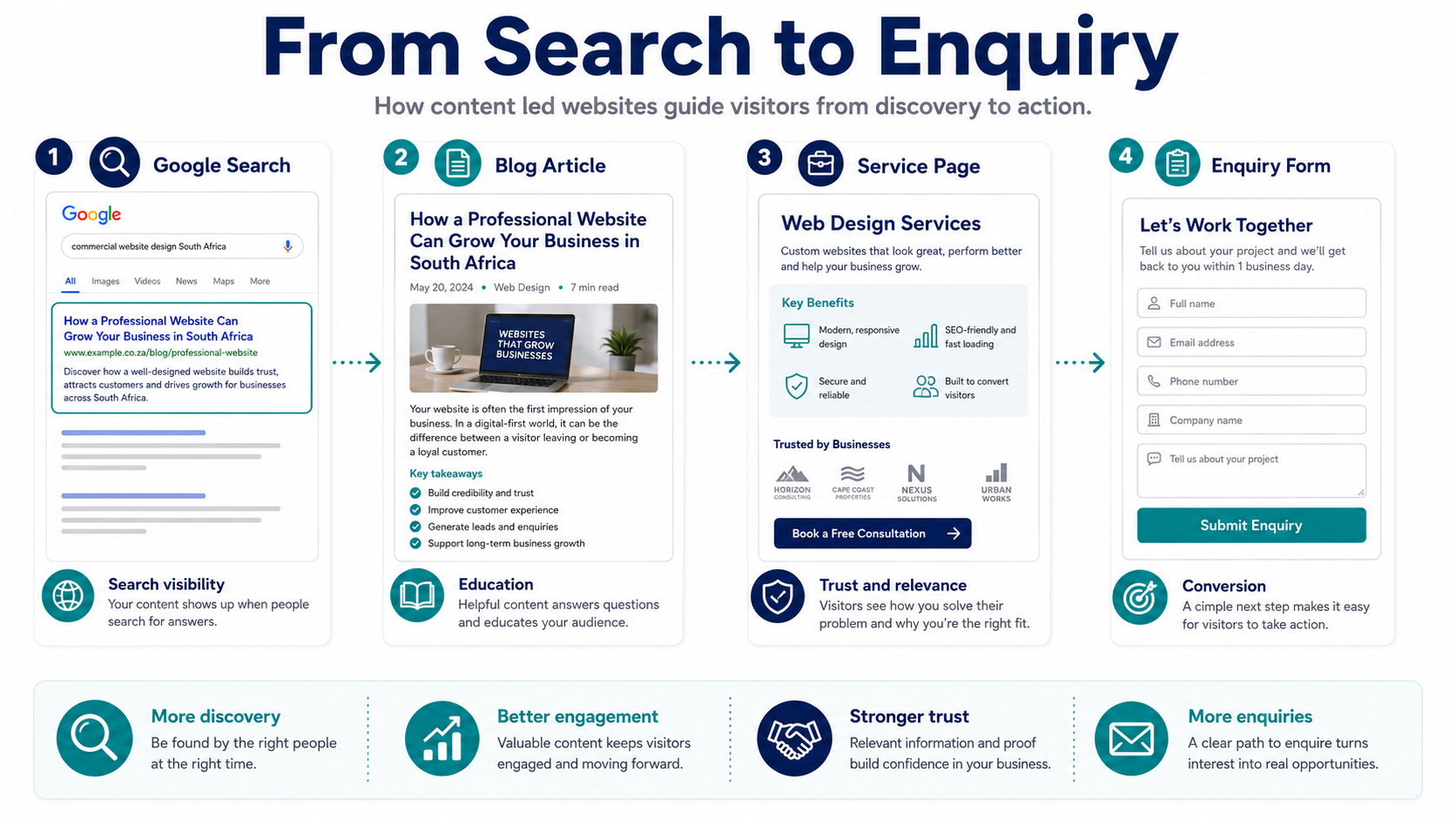
Trend 5: Content led websites are replacing brochure websites
A brochure website tells people that a business exists. A content-led website helps people understand why it matters.
This is becoming more important because buyers often research before they enquire. They compare service providers, look for practical insights, and use search engines to answer very specific questions. A website that only lists services and contact details leaves too much work to the visitor.
A stronger model is to build around content pathways. That means:
- service pages that answer buyer questions
- blogs that support organic visibility
- guides that build trust
- category pages that connect topics clearly
- internal links that move users deeper into the site
For South African businesses, this approach can be especially valuable when marketing budgets are limited and organic growth matters. A website should not only look presentable, it should actively help with discovery, education, and conversion.
This is particularly relevant for firms in software, consulting, compliance, cybersecurity, training, and B2B services, where buyers often need reassurance before making contact.
Trend 6: Flexible architecture matters more than flashy rebuilds
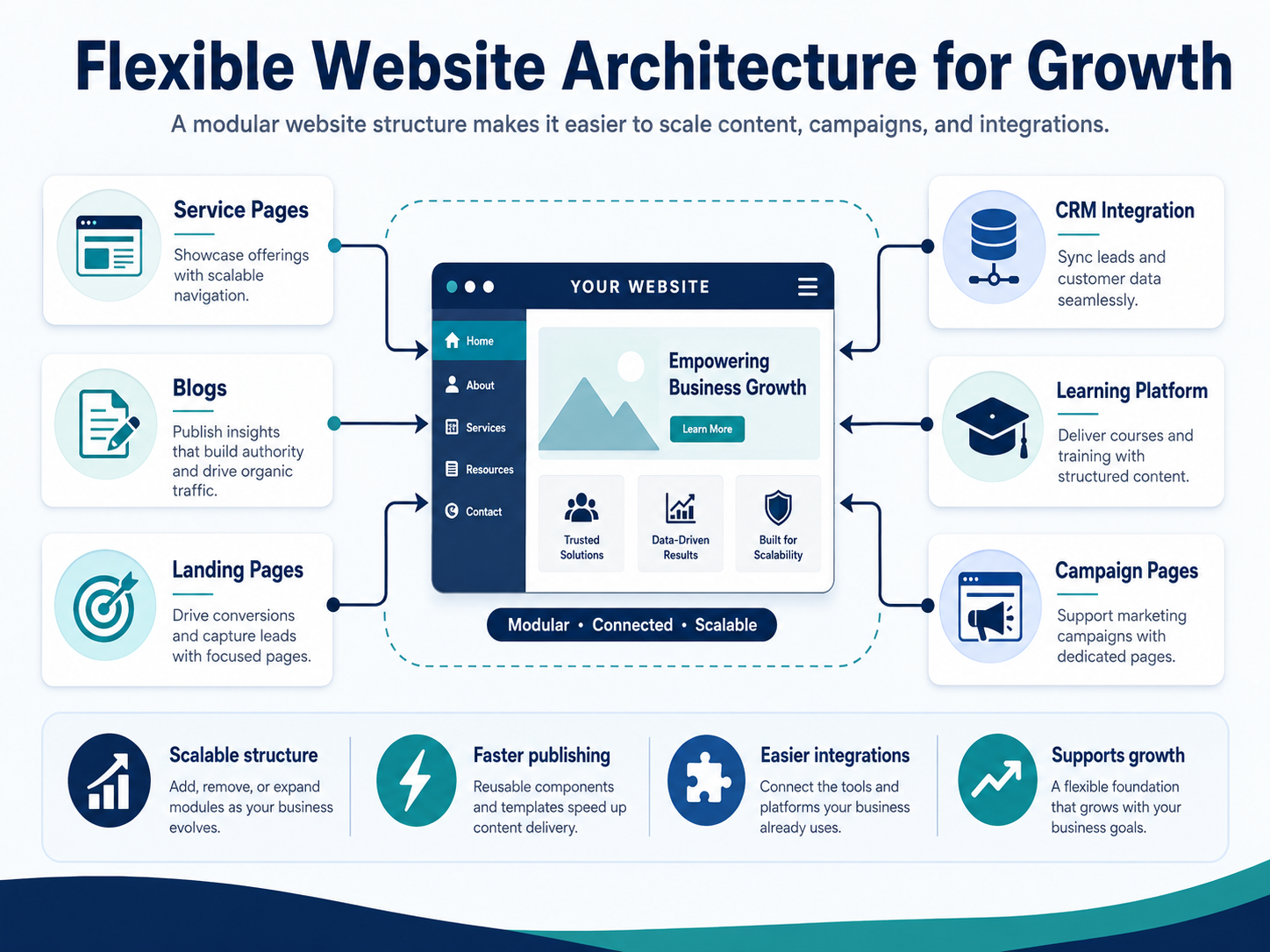
One of the biggest mistakes businesses make is rebuilding a site around aesthetics without thinking about future growth. Six months later they need new landing pages, a resource centre, additional service categories, gated content, or integration with a CRM or learning platform, and the structure starts to strain.
A better approach is to build flexible architecture from the beginning. That includes:
- clear page templates
- scalable navigation
- modular sections
- easy content publishing workflows
- room for blogs, guides, and campaign pages
- sensible integration planning
This matters for South African organisations that operate more than one digital property, such as a main website and an e-learning site. The development approach should make it easier to support both brand authority and educational content without creating inconsistency or duplication.
Flexible architecture also improves speed to market. Marketing teams can publish, test, and expand content without needing a development rebuild for every new idea.
Customisation that proves value
Not every trend deserves equal attention for every business. The right priorities depend on your market, users, content model, and growth goals.
Use this checklist to adapt your web development priorities:
- align the website to real customer journeys
- review mobile usability on real devices
- test speed on key pages, not only the homepage
- simplify forms and reduce friction
- connect SEO planning to development decisions
- protect all points where personal information is collected
- design content structures that can scale over time
- build for maintainability, not only launch day appearance
Customisation is what turns trend awareness into actual commercial value.
WWISE’s final thoughts
The most important web trend in 2026 is not a single technology or visual style. It is the shift toward websites that work harder for the business. For South African companies, that means prioritising mobile first design, stronger website performance, secure web development, search ready structure, content led architecture, and flexibility for future growth.
The businesses that get this right will not necessarily have the flashiest sites. They will have the most useful ones. Their websites will load faster, guide visitors better, build trust earlier, and convert attention into action more consistently.
If your website is due for improvement, this is the right moment to evaluate whether it is only online or whether it is genuinely helping the business grow.
What can WWISE do for YOU?
Need a website that supports SEO, trust, and conversion growth in South Africa? Speak to our team about a web development approach built for performance and practical business results.
